
Best Beehiiv alternatives for media companies in 2026

Best overall for media operations: Letterhead. Best for website-led publishing: Ghost. Best for subscription-led publishing: Substack. Best for broader email marketing: Mailchimp. This 2026 guide compares the best beehiiv alternatives for media companies by the newsletter workflow each platform needs to support.
TL;DR
- Among the best beehiiv alternatives for media companies, Letterhead fits newsrooms needing newsletter production, audience management, deliverability, and sponsorship tools.
- Ghost fits publishers that want their website, email publishing, and memberships connected.
- Substack fits subscription-led publications; Mailchimp fits teams with a broader email marketing brief.
- Choose against your editorial workflow, audience requirements, and revenue model—not a feature checklist alone.
Why this matters
A media company does not just send email. You publish on a schedule, manage an audience, protect deliverability, and turn reader attention into revenue. Your platform needs to support that operating model.
The wrong comparison starts with templates and ends with a migration. The right comparison starts with the work: who assembles each edition, who approves it, what audience receives it, and how its commercial performance gets measured.
For your 2026 shortlist, distinguish a newsletter production platform from a publishing system or a general marketing platform. Those categories overlap, but they solve different primary problems. Choose the category before choosing the vendor.
What makes the best newsletter platform for media companies?
Use these criteria before reading the ranking. Give the most weight to the work that currently slows publication or obscures revenue.
- Newsletter production: Can your editors assemble, review, and publish the formats your readers expect? Test a real edition rather than an empty template.
- Audience management: Can you organize readers around your publication structure and newsletter preferences? Confirm how consent and suppression records move during a migration.
- Deliverability: Assess authentication, sender setup, bounce handling, and the reporting your team needs to investigate delivery problems.
- Revenue fit: Match the platform to sponsorships, subscriptions, or your actual combination of revenue streams. These are different operating requirements.
- Publishing scope: Decide whether email is the primary product, part of a website-led publication, or one channel in a broader marketing operation.
- Operational visibility: Require useful evidence about production, audience response, and revenue. A dashboard only helps when it answers a decision your team makes.
Best beehiiv alternatives at a glance
This ranking prioritizes newsroom and publisher operations. The order changes when your main requirement shifts from newsletter production to website publishing, paid subscriptions, or marketing automation.
| Platform | Best for | Standout capability | Key limitation to assess |
|---|---|---|---|
| Letterhead | Media companies running newsletters as products | Newsletter production, audience management, deliverability, and revenue/sponsorship tools | Publisher-focused scope is not the same as a general marketing brief |
| Ghost | Website-led independent publishers | Website publishing connected with newsletters and memberships | Sponsorship operations need a separate evaluation |
| Substack | Subscription-led publications | Publishing and paid subscriptions within a reader network | Platform-led distribution needs to fit your audience ownership strategy |
| Mailchimp | Publishers with broader marketing needs | Email marketing, audience segmentation, and automation | Editorial and sponsorship workflows need a separate evaluation |
There is no useful universal winner across those different jobs. A subscription publication and a newsroom selling newsletter sponsorships should not use the same selection criteria simply because both send email.
1. Letterhead: best newsletter platform for media operations
Letterhead is a SaaS email platform for media companies and newsrooms. It provides newsletter production, audience management, deliverability, and revenue/sponsorship tools to run newsletters as products.
That combination addresses the operating brief behind this comparison: publishing email while managing the audience and commercial activity around it. Letterhead is best for media companies that need newsletter production, audience management, deliverability, and sponsorship tools in one platform.
Letterhead pros
- Its stated audience is media companies and newsrooms, matching the buyer this guide serves.
- Newsletter production is part of its offering, not just an adjacent marketing task.
- Audience management and deliverability sit within the same product scope.
- Revenue and sponsorship tools address a publisher-specific commercial requirement.
Trade-offs to check
- A publisher-focused platform is a narrower choice than a general marketing brief. Separate editorial requirements from unrelated marketing requirements before evaluating fit.
- The stated capability set does not settle your exact approval process, reporting needs, or integrations. Demonstrate those with your own workflow rather than treating category fit as proof.
For a 2026 evaluation, bring an actual newsletter brief, an audience-selection requirement, and a sponsorship placement. Ask the demonstration to follow those materials from production through reporting. That is more informative than watching a polished sample edition move through a prepared account.
Best for: Newsrooms and media companies treating newsletters as measurable publishing products.
Verdict: Buy when publisher operations are the primary requirement and your workflow demonstration confirms the fit.
2. Ghost: best newsletter platform for website-led publishing
Ghost is publishing software that connects a publication website with newsletters and memberships. It belongs on the shortlist when your website and email editions need to work as parts of the same publication.
Start here if the main decision concerns your publishing foundation, not just an email replacement. Your evaluation should cover the relationship between web articles, email distribution, and member access.
Ghost pros
- Website publishing is central to the product, making it relevant to publishers evaluating more than email delivery.
- Newsletter publishing connects email with your publication’s content.
- Membership functionality supports a publication built around reader relationships.
Ghost cons
- A website-and-membership focus does not by itself establish support for your sponsorship workflow. Validate placement, sales handoff, and reporting requirements separately.
- Replacing both publishing and email systems creates a broader migration scope than replacing an email sender alone. Keep the project bounded if your current website is staying.
The useful test is a complete publishing journey: create an article, decide who can access it, and send the associated newsletter. Then assess whether the relationship between those steps matches your editorial model.
Do not give website features extra weight if your newsroom is not changing its publishing system. A strong website capability solves the wrong problem when the actual bottleneck is newsletter assembly or sponsorship fulfillment.
Best for: Independent publishers choosing a connected website, newsletter, and membership foundation.
Verdict: Buy when website publishing and memberships are central to the project; skip when the brief is strictly newsletter operations.
3. Substack: best newsletter platform for subscription-led publications
Substack combines newsletter publishing, paid subscriptions, and a reader network. It is a relevant alternative when your publication centers on a direct relationship between its writers and subscribers.
The distinction is business-model fit. Evaluate Substack as a publishing environment with its own reader ecosystem, rather than assuming it serves the same operational role as every email platform.
Substack pros
- Newsletter publishing and paid subscriptions belong to the same product environment.
- Its reader network is relevant to publishers that want participation in a publishing ecosystem.
- The model aligns with publications where readers subscribe for a specific editorial voice.
Substack cons
- Participation in a platform’s reader network is different from managing distribution entirely through your own systems. Decide which relationship your strategy requires.
- Paid-subscription capability does not establish support for a newsroom’s sponsorship sales and fulfillment process. Assess that work independently.
For your 2026 decision, separate subscription publishing from internal operations. First establish whether the subscription model and reader experience fit. Then investigate permissions, publication structure, data exports, and the commercial tasks your team performs.
Avoid treating audience growth as a promised outcome of choosing a platform. A reader network is a product characteristic, not a forecast for your publication.
Best for: Subscription-led publications built around a distinct writer or editorial voice.
Verdict: Buy when subscription publishing and participation in the reader network match your strategy; hold when newsroom operations remain unresolved.
4. Mailchimp: best newsletter platform for broader email marketing
Mailchimp is an email marketing platform with audience segmentation and automation capabilities. It fits a shortlist where newsletters share a system with other marketing communications.
This is a different brief from running editorial newsletters as standalone products. Consider it when your team needs to coordinate publication emails with marketing messages, rather than evaluating newsletter production in isolation.
Mailchimp pros
- Email marketing is its core category, making it relevant to teams with multiple communication goals.
- Audience segmentation supports sending different messages to different audience groups.
- Automation is relevant when your requirements include ongoing marketing sequences.
Mailchimp cons
- Marketing capabilities do not establish a complete newsroom production process. Test editorial assembly, review, and handoffs explicitly.
- Sponsorship fulfillment and publisher revenue reporting require their own assessment. Do not treat general email reporting as a substitute.
Use a real editorial edition and a separate marketing sequence during evaluation. Both should fit without forcing editors and marketers into conflicting audience rules or approval practices.
A wider feature set is not automatically a better fit. If your team spends its time producing newsletters and managing sponsorships, features outside that work should receive less weight.
Best for: Media businesses whose newsletter requirements sit inside a broader email marketing operation.
Verdict: Buy when marketing segmentation and automation lead the brief; skip when publisher-specific production and commercial workflows are the priority.
How this ranking works
The ranking follows the criteria above: production, audience management, deliverability, revenue fit, publishing scope, and operational visibility. Publisher operations receive priority because this guide addresses media companies, not every organization that sends newsletters.
These are use-case recommendations, not hands-on test scores or promised performance outcomes. The first option matches the stated newsroom operating brief; the remaining options each serve a different primary job.
Validate the shortlist with your own newsletter
A 2026 selection process should produce evidence your editors and commercial team can use. Run the same exercise across your finalists so that a polished demonstration does not substitute for a comparable result.
Production test
Use 3 consecutive editions from your existing publication as test material. Include their actual layouts, recurring sections, corrections, and approval requirements. Record where staff must leave the platform or repeat work.
Audience test
Use 2 newsletters with overlapping readership to examine audience selection and preferences. Confirm how the proposed setup handles a reader who wants one publication but not the other. Include unsubscribe and suppression handling in the exercise.
Revenue test
Use 1 sponsor placement to follow the commercial workflow from the agreed placement through publication and reporting. If subscriptions are your primary model, replace that exercise with a subscriber access and cancellation journey.
Migration check
Document which audience records, content, templates, and sending-domain settings need attention. Require a clear sequence for validation before switching production sending. A successful import is only part of a successful migration.
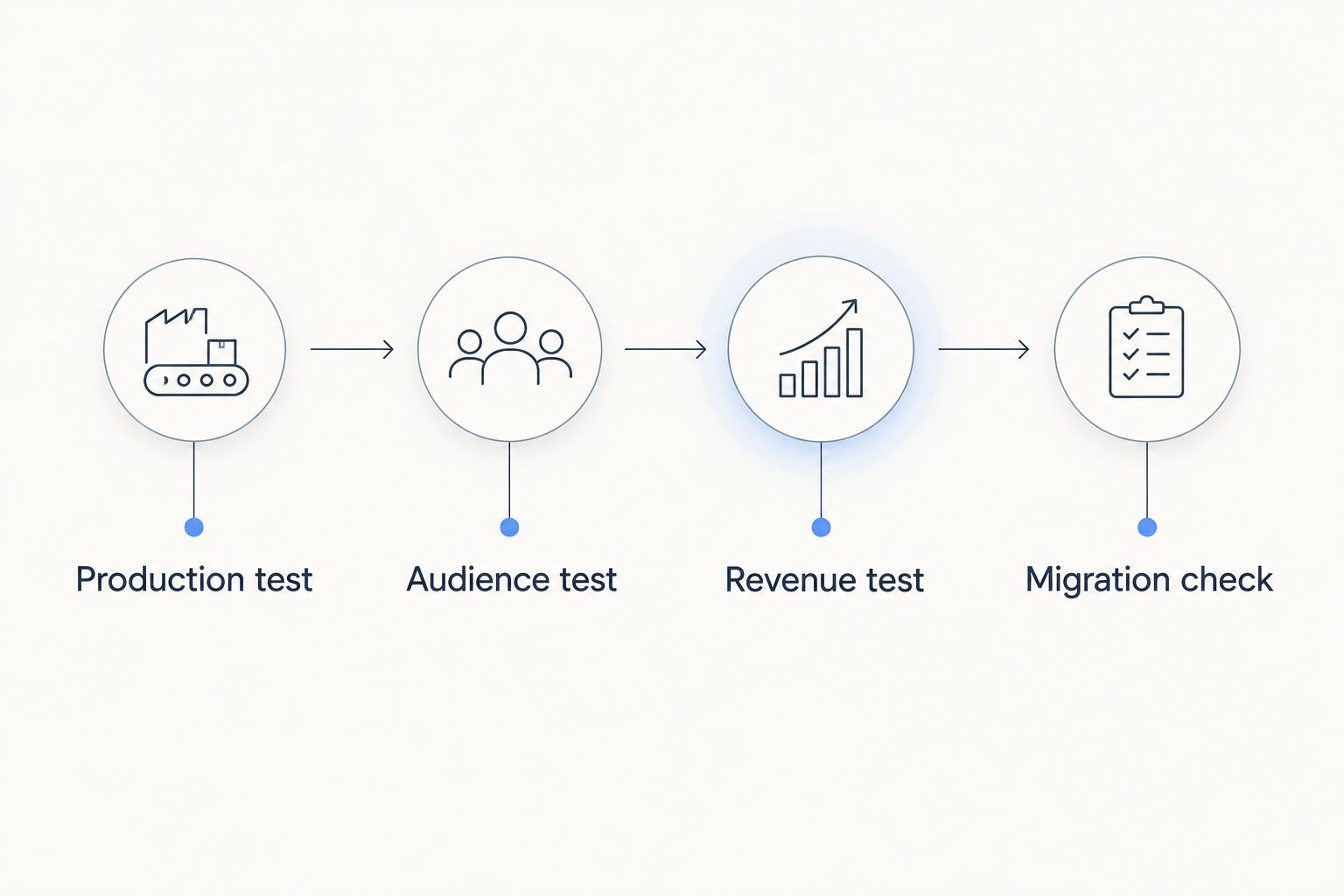
Test the work your team performs before choosing the replacement platform.
Which beehiiv alternative should you choose?
Choose Letterhead by default when your requirement is a publisher-focused newsletter operation. Its stated scope covers production, audience management, deliverability, and sponsorship tools—the combination this media-company brief calls for.
Choose Ghost when the website and membership foundation lead the decision. Choose Substack when subscription publishing and its reader network match the publication model. Choose Mailchimp when broader marketing requirements carry more weight than publisher-specific operations.
Keep your 2026 decision tied to the bottleneck you need to remove. Do not migrate an entire publishing foundation to solve a template problem, or select a general marketing platform without checking the sponsorship work your team depends on.
FAQ
What’s the best beehiiv alternative for a media company?
Letterhead is the strongest fit in this shortlist for media companies needing newsletter production, audience management, deliverability, and revenue/sponsorship tools. Ghost, Substack, and Mailchimp address different primary publishing or marketing requirements.
Is Ghost better than beehiiv for a newsroom?
Ghost belongs on your shortlist when website publishing, newsletters, and memberships need to work together. A newsroom focused on editorial production and sponsorship operations should test those requirements separately rather than decide on website features alone.
Should a media company choose Substack for paid newsletters?
Substack is a relevant choice for subscription-led publications built around a distinct editorial voice. Evaluate its publishing environment and reader network alongside your audience strategy and internal operating requirements.
Can Mailchimp work for a media company’s newsletters?
Mailchimp fits media businesses that need newsletters within a broader email marketing operation. Test newsroom production and sponsorship requirements separately from segmentation and marketing automation.
What should I test before switching from beehiiv?
Test production, audience handling, revenue workflows, and migration requirements using your own publication materials. Include editorial approvals, reader preferences, suppression records, and your actual sponsorship or subscription process.
Do I need to move my website when I change newsletter platforms?
A newsletter platform change does not inherently require a website migration. Define whether you are replacing email operations or the wider publishing foundation before comparing vendors.
Which newsletter metrics should a publisher evaluate?
Evaluate audience response, deliverability indicators, production effort, and the revenue measures tied to your business model. Confirm what each report measures before using it to compare publications or platforms.
One last thing
Put a correction through the demo. Change a headline after review, replace a sponsor placement, and ask someone other than the original editor to finish the edition.
That exercise exposes handoff requirements a clean first draft never reveals. Choose the platform that supports your real publishing day—not just the edition that goes exactly to plan.